
Sustainable Paper Bags: Guide for Eco-Conscious Businesses
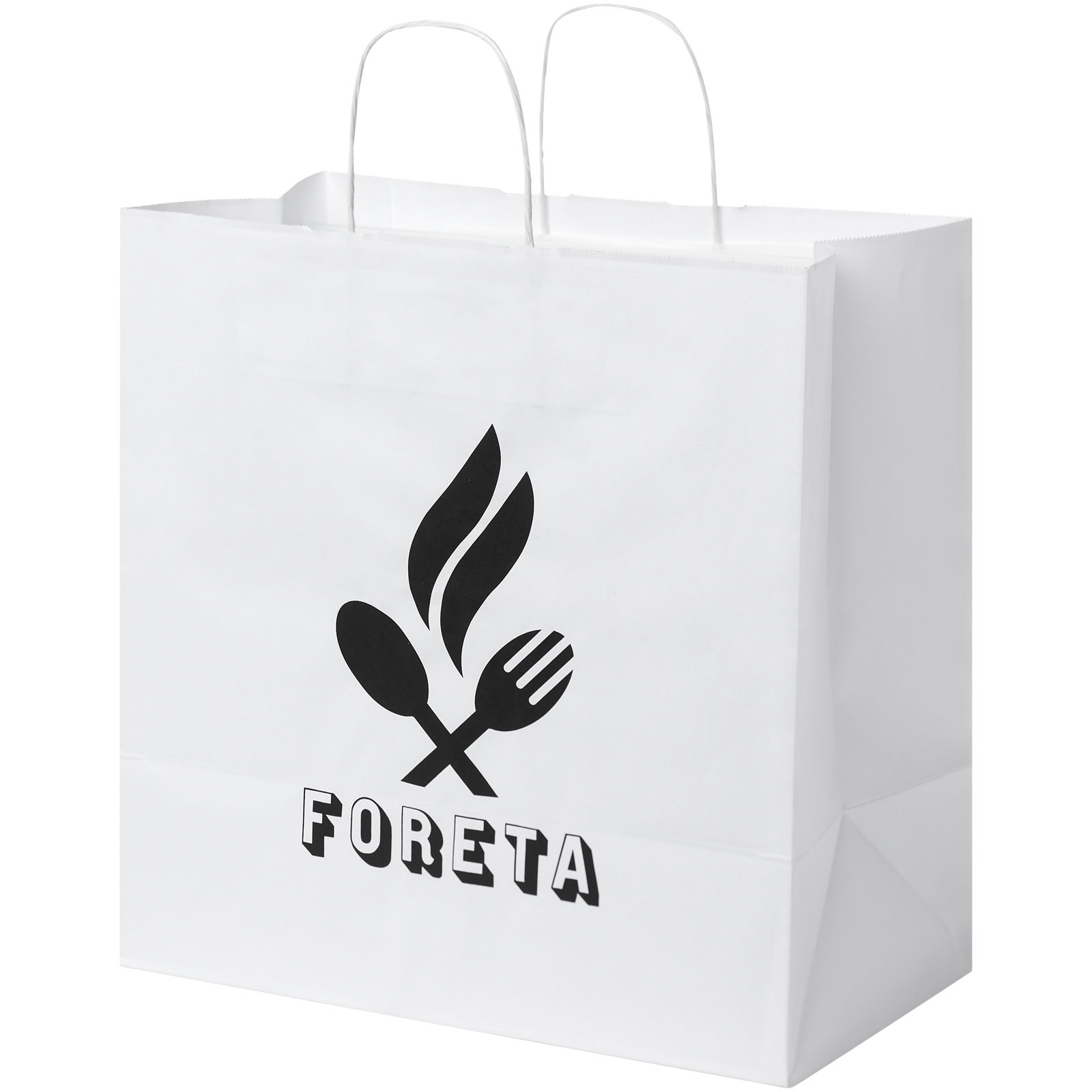
Discover how sustainable paper bags strengthen your brand: materials, certifications, print options and specific product recommendations.
Sustainable paper bags are one of the most effective ways for eco-conscious businesses to combine practical packaging with visible brand values – and with FSC-certified options starting from €0.73 per unit, going green no longer means paying a premium.
Quick answer: what makes a paper bag genuinely sustainable?- Certified materials: Look for FSC-certified paper or innovative alternatives such as agricultural waste fibre
- Recyclability: Uncoated kraft paper and twisted paper handles are fully recyclable in standard paper streams
- Right-sizing: Choosing the correct dimensions reduces material waste and shipping emissions
- Durability: A heavier grammage (200 g/m²+) means the bag gets reused, multiplying your brand exposure
Why sustainable paper bags matter for your brand
Consumers increasingly judge businesses by their packaging. A plastic carrier bag sends one message; a sturdy, FSC-certified paper bag with your logo sends quite another. In our experience working with retailers, event organisers and B2B companies across Europe, the paper bag is often the single most visible branded item a customer takes home – it travels through streets, offices and public transport, working as a mobile billboard.
The sustainability angle amplifies this effect. When your bag carries an FSC mark or is made from agricultural waste, it tells customers that your environmental commitment extends to the details. That credibility is hard to buy through advertising alone.
There's also a regulatory dimension. With the EU continuing to tighten rules on single-use plastics, paper bags are the safe, future-proof choice for customer-facing packaging.
Which materials should you choose?
Not all paper bags are equally sustainable. Here are the three factors we recommend evaluating:
FSC-certified paper
FSC certification guarantees the paper comes from responsibly managed forests. This is the baseline standard we'd recommend for any business making sustainability claims – it gives you a recognisable, third-party-verified logo to point to if customers ask.
Agricultural waste fibre
An increasingly popular alternative uses fibre from agricultural by-products instead of virgin wood pulp. This diverts waste streams into useful products and typically carries a lower environmental footprint. Our paper bag made from agricultural waste (150 g/m², 18 x 9 x 23 cm) is a strong example – at from €1.04 per unit, it offers a genuinely distinctive sustainability story for a modest price.
Grammage and finish
Grammage (g/m²) determines durability:
- 120 g/m²: Ideal for lightweight retail items, giveaways and event handouts
- 150 g/m²: A good all-rounder for most retail applications
- 230 g/m²: Premium weight for heavier contents – and crucially, heavy enough that customers keep and reuse the bag
One honest caveat: laminated finishes (matte or glossy) improve durability and print appearance but make recycling slightly more complex than uncoated kraft. If maximum recyclability is your priority, choose uncoated. If reuse and longevity matter more, a laminated 230 g/m² bag that gets used twenty times may well be the greener choice overall.
Our recommendations for different budgets and use cases
Best budget option: The kraft paper bag 120 g/m² with twisted handles (18 x 9 x 23 cm) at from €0.73 per unit. FSC-certified, fully recyclable and perfect for trade show giveaways or lightweight retail purchases. At this price, there's simply no argument left for plastic. Best sustainability story: The agricultural waste paper bag mentioned above. When a customer asks about your packaging, "it's made from farming by-products" is a conversation starter that standard kraft paper isn't. Best premium option: The Smartfold 230 g/m² paper bag with satin handles and matte lamination (42 x 12 x 35 cm) at from €2.17 per unit. The Smartfold range comes in five sizes (from 24 x 10 x 24 cm at €1.83), so you can right-size across your product range – smaller bags for smaller purchases means less wasted material. The satin handles and matte finish give a boutique feel that encourages reuse.Browse the complete range of paper bags with print to compare sizes, materials and pricing side by side.
Making the most of your sustainable bags
A few practical tips from campaigns we've seen work well:
- Print your sustainability message on the bag itself – a short line such as "FSC-certified – please reuse and recycle" reinforces the value
- Match bag size to typical purchase size – oversized bags waste material and look careless
- Pair with other eco-friendly items for a coherent brand experience; our guide to sustainable take-away cups with print covers a natural companion product
- For events where maximum reuse matters, compare paper against fabric alternatives – see our article on cotton tote bags for trade shows
FAQ
Are paper bags actually better for the environment than plastic?For customer-facing retail use, generally yes – paper is renewable, biodegradable and widely recycled across Europe. The full picture depends on reuse rates, which is why choosing a durable bag that customers keep is the single biggest lever you control.
Can sustainable paper bags still carry full-colour branding?Absolutely. Kraft paper takes one- and two-colour prints beautifully, while laminated bags such as the Smartfold range support high-quality full-colour designs with a premium finish.
What quantity should I order?Unit prices drop meaningfully at higher volumes, so estimate 6–12 months of usage and order in one batch. This also reduces shipping emissions compared with frequent small orders.
Sustainable paper bags are a rare win-win: lower environmental impact, stronger brand perception and prices starting under €1 per unit. Start with your typical purchase size, choose a certified material and let your bag do the talking.
About the author
ProfilProdukter.com
Writer
Related categories
Related articles
Sustainable Tote Bags: A Guide for Eco-Conscious Businesses
Discover which sustainable tote bag materials deliver real environmental value, from organic cotton to RPET, with specific product recommendations.
Printing on Bags: Which Method Suits Your Business?
Screen print, transfer or embroidery? Compare printing methods for bags by cost, durability and material to find the right fit for your brand.
Sustainable Tech Gadgets: A Guide for Eco-Conscious Businesses
Discover how sustainable tech gadgets made from recycled materials strengthen your brand, meet CSRD demands and impress eco-conscious clients.