
Printing on Paper Bags: How to Choose the Right Method for Your Brand
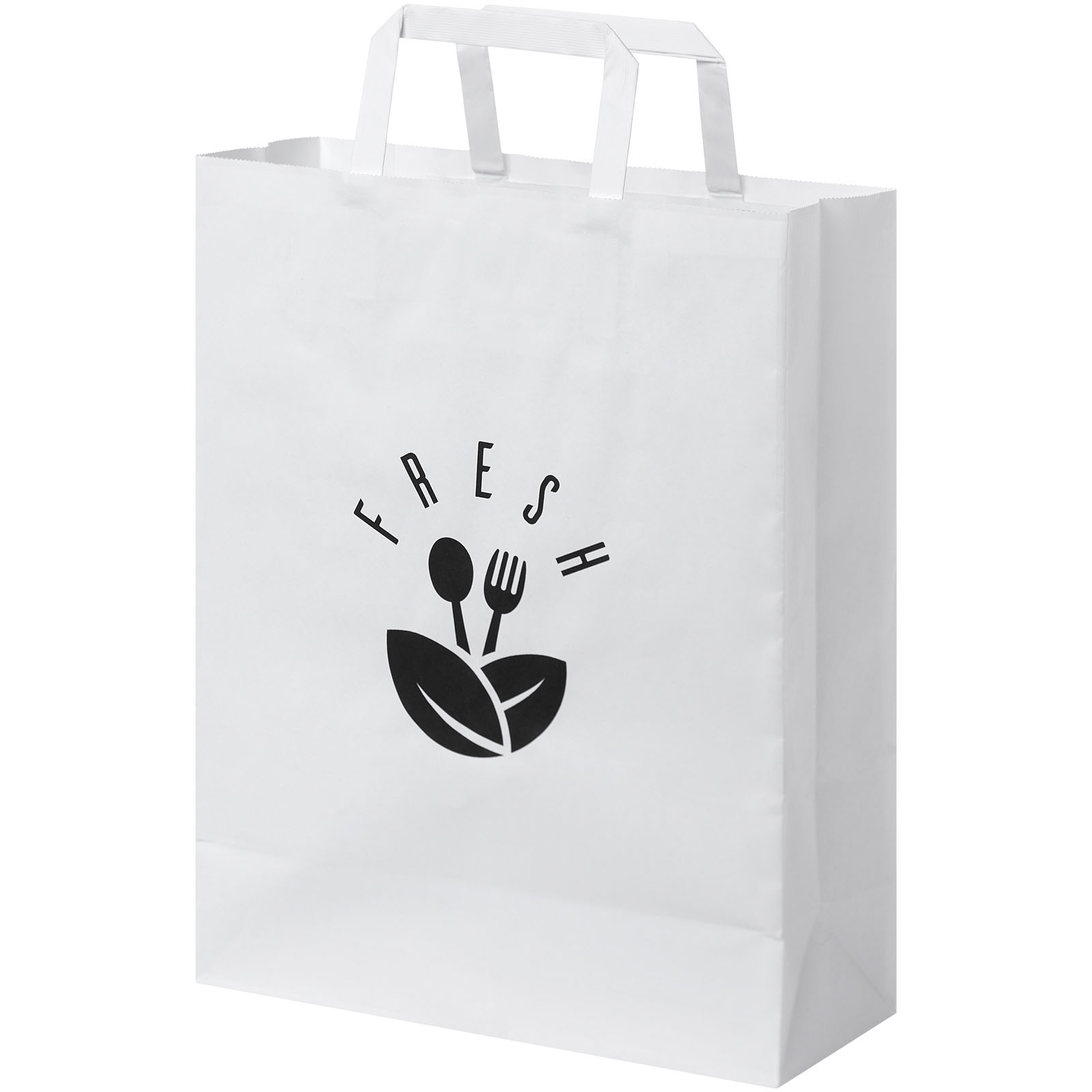
A practical guide to flexographic, digital and screen printing on paper bags, helping your business match the right method to order volume, artwork and material.
The best way to print on paper bags depends on three factors: your order volume, the complexity of your artwork, and the look you want your branded packaging to achieve. Choosing the wrong method can mean overpaying for a simple logo or losing impact on a detailed design. This guide breaks down the main options so your business can order custom paper bags with confidence.
Printing Methods at a Glance
• Flexography: The most cost-effective choice for high-volume wholesale orders (1,000+ units) with 1 to 3 spot colours.
• Digital printing: Ideal for small batches, gradients, photographic artwork and full-colour CMYK designs.
• Screen printing: Delivers thick, vibrant ink layers and precise Pantone matching, even on dark or brown paper.
• Material matters: Uncoated Kraft paper absorbs ink and softens colours, while smoother stock gives a crisper result.
Flexographic Printing for High-Volume Orders
Flexography is the workhorse of the paper bag industry. Flexible relief plates wrap around a rotating cylinder and transfer ink directly onto the paper as it passes through the press. The plate setup carries an initial cost, but the price per unit drops significantly as quantities grow, which makes flexo the standard choice for large retail rollouts across our complete range of paper bags. A proven format for this method is the Kraft paper bag 120 g/m2 (31 x 12 x 41 cm).
Digital Printing for Full-Colour Flexibility
If your artwork includes gradients, shadows or photography, digital printing is the right tool. There are no plates involved, so setup costs are minimal and small runs become affordable. This makes digital the go-to option for limited editions, seasonal campaigns and event packaging. Many companies preparing for exhibitions combine printed paper bags with other giveaways, such as cotton tote bags for trade shows, and use digital printing to test several designs without a large commitment.
Screen Printing for Precise Brand Colours
When a specific Pantone shade must look identical across all touchpoints, screen printing is often the safest route. Ink is pushed through a mesh stencil, which creates a thicker, more opaque ink layer than other methods. Key advantages:
• Excellent coverage for light colours on brown Kraft paper.
• A durable, slightly tactile finish that feels premium.
• Reliable colour accuracy for strict corporate brand guidelines.
That tactile quality matters for businesses aiming to build brand loyalty through strategic merchandise, because the bag itself becomes part of the brand experience.
Choosing the Right Material
• Kraft paper: Strong, sustainable and professional. Its porous surface absorbs ink and produces a matte, organic finish. The Kraft paper bag 120 g/m2 (24 x 9 x 24 cm) suits smaller retail items.
• Agricultural waste paper: A growing sustainable alternative with a distinctive texture. The robust paper bag 150 g/m2 of agricultural waste (31 x 12 x 25 cm) handles heavier ink coverage without warping and gives eco-focused brands a genuine story to tell.
FAQ
Which method is cheapest for small orders?Digital printing, since it removes the setup costs of plates and screens.
Can paper bags be printed on both sides?Yes. With flexography this may require an extra plate set, which raises the initial cost.
How does paper colour affect the print?White paper gives true colour reproduction. Brown Kraft mutes colours, so bright artwork on brown paper works best with screen printing and an opaque white underlay.
About the author
International Marketing Expert & Brand Strategist
James has over 10 years of experience in European B2B marketing and promotional products, working with companies across the UK, Germany, and the Nordic countries.
Related categories
Related articles
Printing on Bags: Which Method Suits Your Business?
Screen print, transfer or embroidery? Compare printing methods for bags by cost, durability and material to find the right fit for your brand.
Games & Toys with Print: The Complete Business Guide
Learn how to choose the right games and toys with print for your brand – from stress relievers to wooden puzzles, with prices and practical tips.
Branded Candy & Sweets with Print: A Practical Guide for European Businesses
Discover how branded candy and printed sweets drive trade show traffic and long-term brand visibility, from tin packaging and flavour choices to ROI-focused distribution strategies.